


 New Cars
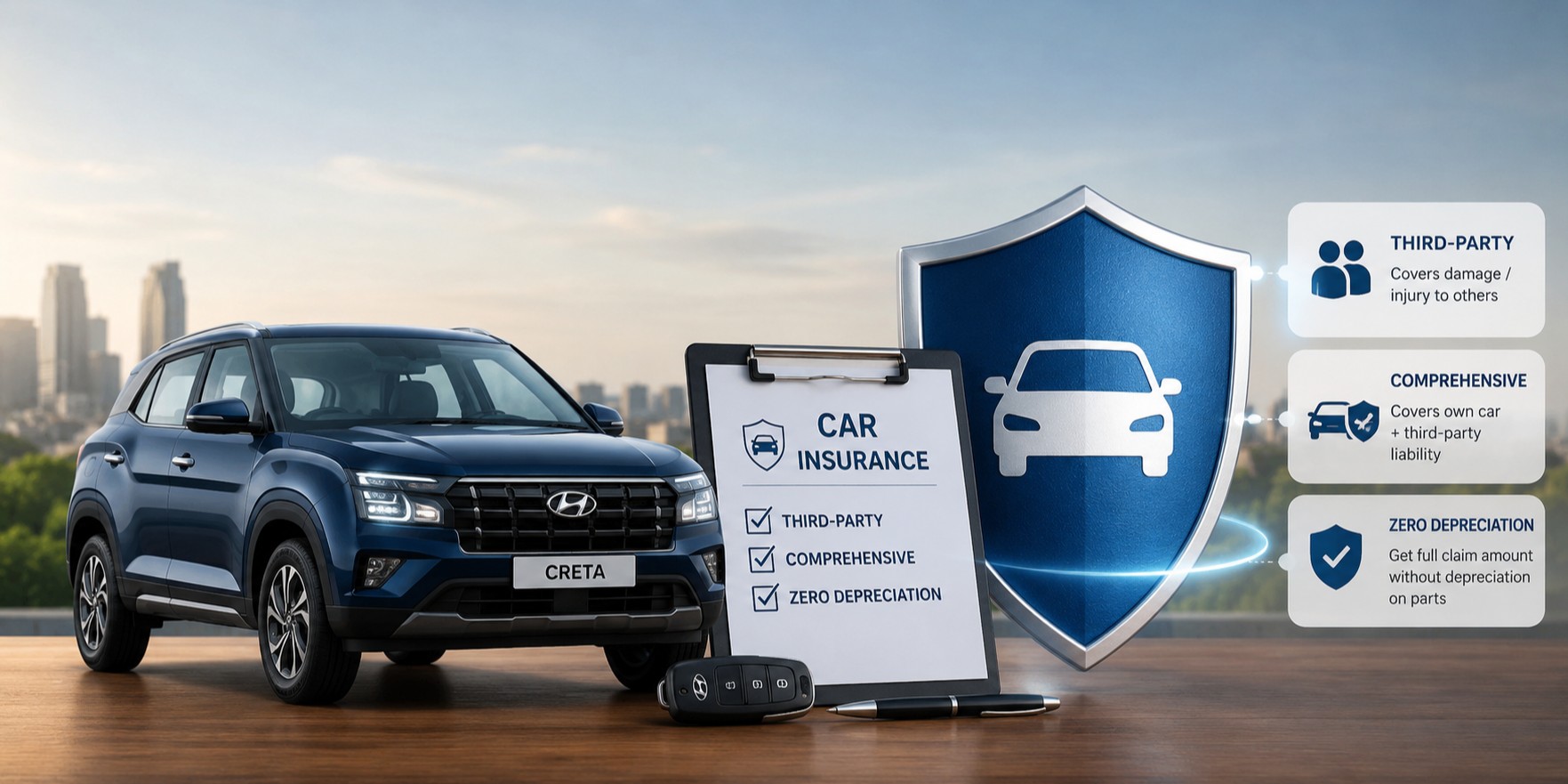
Car Insurance Types in India: Third-Party vs Comprehensive vs Zero-Dep (2026 Guide)
Confused about car insurance types in India? Compare third-party, comprehensive & zero-dep cover with real Hyundai Creta pricing examples from Lakshmi Hyundai, Vizianagaram.
Introduction
Car insurance types in India fall into three main categories: third-party, comprehensive, and comprehensive with a zero-depreciation add-on. Third-party is the legal minimum, while comprehensive and zero-dep offer wider protection for your own vehicle. This guide from Lakshmi Hyundai, Vizianagaram, breaks down each option so first-time buyers can choose confidently.
Key Takeaways
Third-party car insurance is legally mandatory under the Motor Vehicles Act and covers damage/injury to others only - not your own car.
Comprehensive insurance covers third-party liability plus damage to your own vehicle from accidents, fire, theft, and natural calamities.
Zero depreciation (zero-dep) is an add-on to comprehensive cover that pays the full cost of replaced parts without deducting depreciation.
For a new Hyundai like the Creta, zero-dep is usually worth it for the first 3–5 years, approx.
Premiums depend on your car's IDV (Insured Declared Value), city, and No Claim Bonus (NCB) history.
What Is Third-Party Car Insurance?
Third-party car insurance covers legal liability if your car injures a person or damages someone else's property or vehicle. It does not pay for repairs to your own car under any circumstance. This is the only insurance type mandated by law in India, so every car on the road must carry at least this cover.
Premiums are fixed by the IRDAI (Insurance Regulatory and Development Authority of India) and vary by engine capacity rather than car model. For a mid-size SUV segment like the Hyundai Creta (1.5L petrol/diesel), third-party premium for private cars typically falls in the approx. 3,400–7,900 per year bracket, depending on the policy tenure and engine size.
Comprehensive Insurance vs Third-Party Insurance: What's the Difference?
Comprehensive insurance includes all the protection offered by third-party insurance and adds own damage coverage for your vehicle. This means you're protected not only against liability for injuries or property damage caused to others but also against repair or replacement costs for your own car due to accidents, theft, fire, riots, vandalism, and natural disasters such as floods and cyclones. For drivers in coastal regions near Vizianagaram, where heavy rains and flooding can occur, this additional protection can be especially valuable.
The key difference between third-party insurance and comprehensive insurance is the level of coverage. Third-party insurance is the minimum legal requirement in India and only covers damages or injuries caused to other people and their property. It does not pay for repairs to your own vehicle or compensate you if your car is stolen or damaged by fire or natural disasters. In contrast, comprehensive insurance offers broader financial protection by covering both third-party liabilities and your own vehicle. Unlike a standard third-party policy, comprehensive insurance lets you customize your coverage with add-ons such as Zero Depreciation Cover, Engine Protection Cover, Roadside Assistance, and Return to Invoice Cover for enhanced financial protection. While third-party insurance for a Hyundai Creta typically costs around 3,400–7,900 per year, a comprehensive policy generally ranges from 18,000–32,000 annually, depending on the variant, location, insurer, and selected add-ons. Although comprehensive insurance is not legally mandatory, it is widely recommended because it provides significantly greater financial security and peace of mind.
What Is Zero Depreciation Cover, and Is It Worth It?
Zero depreciation (zero-dep) is an add-on available only with comprehensive policies. During a normal claim, insurers deduct depreciation on plastic, fibre, and metal parts before payout - with zero-dep, you get the full replacement cost instead.
For a new Hyundai Creta, this can mean a real difference of approx. 15,000–25,000 saved on a single bumper-and-headlamp claim. Most insurers cap zero-dep eligibility to vehicles under 5 years old and allow only 2–4 claims per policy year, so check your policy wording before assuming unlimited use.
How Much Does Comprehensive Insurance Cost for a Hyundai Creta in Vizianagaram?
Actual premiums depend on variant, fuel type, and IDV, but here's a realistic approx. range for first-year comprehensive cover on a Hyundai Creta in Andhra Pradesh:
Base petrol variant (approx. 11–13 lakh on-road): approx. 19,000–22,000/year comprehensive, approx. 24,000–27,000/year with zero-dep.
Mid-range turbo petrol/diesel (approx. 15–18 lakh on-road): approx. 24,000–28,000/year comprehensive, approx. 29,000–34,000/year with zero-dep.
Top-end/N Line variant (approx. 19–20 lakh on-road): approx. 28,000–32,000/year comprehensive, approx. 34,000–38,000/year with zero-dep.
These are estimates for planning purposes; your exact premium is calculated from IDV, city RTO zone, and any No Claim Bonus carried over from a previous policy.
How to Choose the Right Cover: A Simple Checklist
Check if you're financing the car. Most banks and NBFCs mandate comprehensive cover (often with zero-dep) for the loan tenure.
Estimate your car's age. New cars (0–3 years) benefit most from zero-dep; older cars may not qualify at all.
Consider your driving environment. Frequent city/highway driving near Vizianagaram, with monsoon flooding risk, favours comprehensive over third-party alone.
Compare IDV offered. Choosing a lower IDV can reduce your insurance premium, but it also decreases the amount you'll receive if your car is declared a total loss. Focus on getting the right coverage rather than simply selecting the cheapest policy.
Review add-ons. Engine protection, roadside assistance, and return-to-invoice cover are worth evaluating alongside zero-dep.
Frequently Asked Questions
Is comprehensive insurance mandatory in India?
No, only third-party insurance is legally mandatory under the Motor Vehicles Act. Comprehensive insurance is optional but strongly recommended, since it protects your own vehicle against accidents, theft, and natural damage - costs that third-party cover will never pay for.
What is the difference between comprehensive insurance vs third-party insurance?
Third-party insurance only pays for injury or damage you cause to others; it never covers your own car. Comprehensive insurance vs third-party insurance comes down to this: comprehensive includes third-party liability plus own-damage cover for your vehicle, making it the safer choice for a new car owner.
Does zero depreciation cover apply to old cars?
Most insurers restrict zero-dep add-ons to cars under approx. 5 years old, and some limit it further to 3 years. Beyond that age, depreciation deductions on parts usually apply as standard, even with a comprehensive policy, so check eligibility at renewal time.
Can I upgrade from third-party insurance to comprehensive insurance before my policy expires?
Generally, no - you can only choose your cover type at the time of purchase or renewal, not mid-term. If you currently hold only third-party insurance, you'll need to wait until your policy is due for renewal to upgrade to comprehensive or add zero-dep.
How does No Claim Bonus (NCB) affect my premium?
NCB is a discount on your own-damage premium for each claim-free year, ranging from approx. 20% in year one up to approx. 50% after five consecutive years. It's tied to you as the policyholder, not the car, so it can be transferred to a new vehicle.
Which cover should a first-time Hyundai Creta buyer choose?
For a new Hyundai Creta, comprehensive insurance with a zero-dep add-on is usually the practical choice, especially if the car is financed. It costs more upfront but avoids large out-of-pocket repair costs in the first few years of ownership.
Conclusion
Choosing between third-party, comprehensive, and zero-dep cover comes down to your car's age, your budget, and how much risk you're willing to carry yourself. For a new Hyundai Creta or any 2026 Hyundai model, comprehensive with zero-dep offers the strongest protection during the years it matters most.
Visit Lakshmi Hyundai in Vizianagaram to test drive the Creta and get a personalised insurance quote matched to your exact variant and budget - our team will walk you through the numbers before you sign anything.
- Introduction
- Key Takeaways
- What Is Third-Party Car Insurance?
- Comprehensive Insurance vs Third-Party Insurance: What's the Difference?
- What Is Zero Depreciation Cover, and Is It Worth It?
- How Much Does Comprehensive Insurance Cost for a Hyundai Creta in Vizianagaram?
- How to Choose the Right Cover: A Simple Checklist
- Frequently Asked Questions
- Is comprehensive insurance mandatory in India?
- What is the difference between comprehensive insurance vs third-party insurance?
- Does zero depreciation cover apply to old cars?
- Can I upgrade from third-party insurance to comprehensive insurance before my policy expires?
- How does No Claim Bonus (NCB) affect my premium?
- Which cover should a first-time Hyundai Creta buyer choose?
- Conclusion

29 July 2026